Meemo is a social finance app that overlays your financial life with modern, AI-powered features that feel both personal and playful. It combines automatic rewards, peer-to-peer gifting, and insightful transaction reviews into one experience.
My role
At Meemo, a social finance startup, I held a hybrid role bridging UX and Visual Design. I was one of four designers responsible for shaping the 0 → 1 design of a complex, feature-rich mobile app that reimagined the way users interact with their finances.
Given the wide scope of the product, I collaborated cross-functionally with design, product, and engineering to streamline the feature hierarchy, improve information architecture, and redefine navigation models to support newly added and updated functionalities.
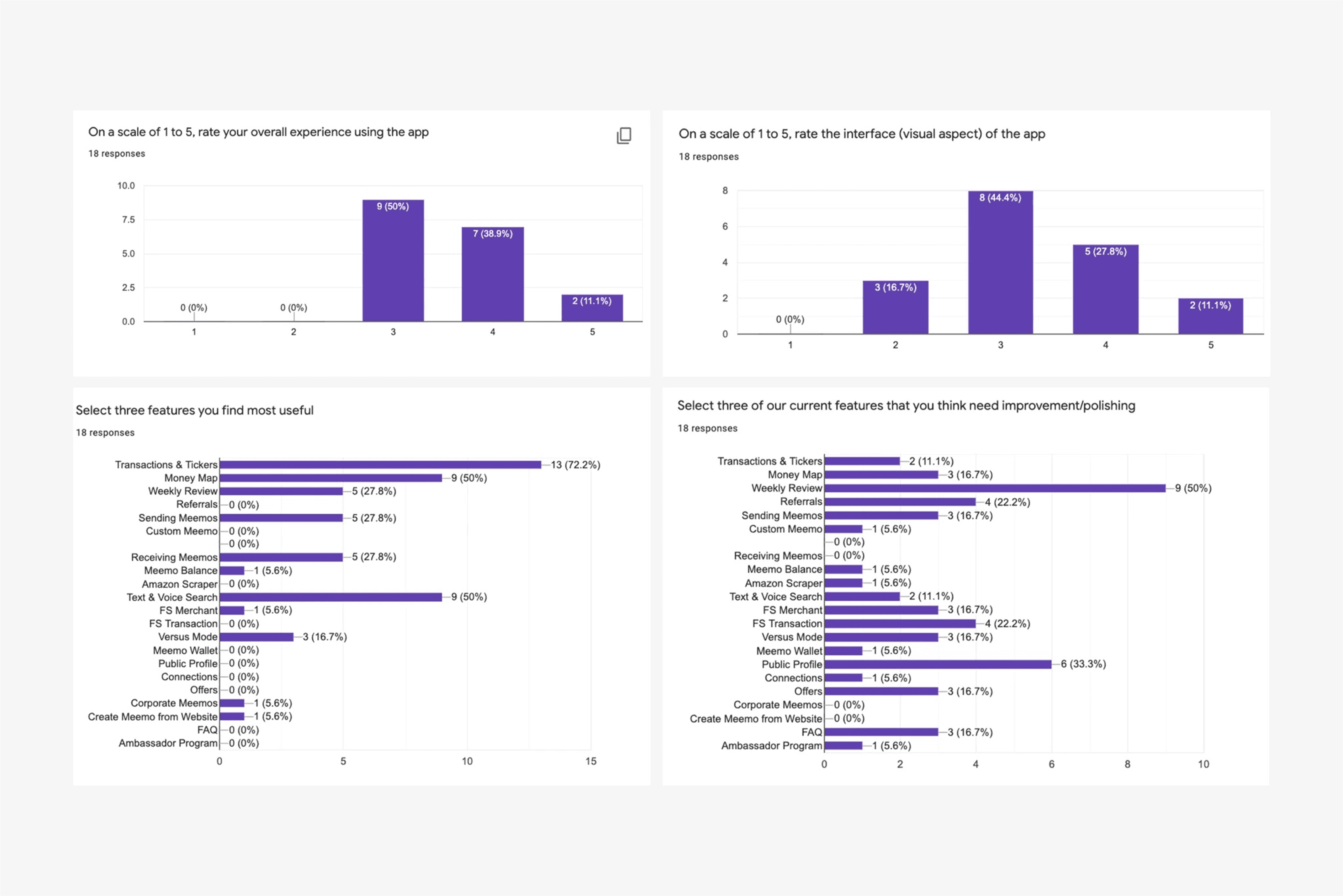
In response to usability challenges revealed through app store reviews and product analytics, I co-led a redesign initiative focused on improving clarity, engagement, and discoverability across the app. This included defining and testing structural models that balanced technical feasibility with user needs.
Additionally, I helped establish Meemo’s first design system. This involved weekly workshops to align on design principles and collaboratively define tokens for color, type, spacing, and interaction patterns. I supported the visual direction while our teammate Matheus refined and documented components for consistency and scalability.
At Meemo, a social finance startup, I held a hybrid role bridging UX and Visual Design. I was one of four designers responsible for shaping the 0 → 1 design of a complex, feature-rich mobile app that reimagined the way users interact with their finances.
Given the wide scope of the product, I collaborated cross-functionally with design, product, and engineering to streamline the feature hierarchy, improve information architecture, and redefine navigation models to support newly added and updated functionalities.
In response to usability challenges revealed through app store reviews and product analytics, I co-led a redesign initiative focused on improving clarity, engagement, and discoverability across the app. This included defining and testing structural models that balanced technical feasibility with user needs.
Additionally, I helped establish Meemo’s first design system. This involved weekly workshops to align on design principles and collaboratively define tokens for color, type, spacing, and interaction patterns. I supported the visual direction while our teammate Matheus refined and documented components for consistency and scalability.
Scope
Peer-to-Peer (P2P) Payments
Customization & Personalization
Social Media-inspired Interactions
Money Map & Weekly Review
Referrals, Profiles, and Settings
Overall App Architecture and Navigation
Your finances at a glance
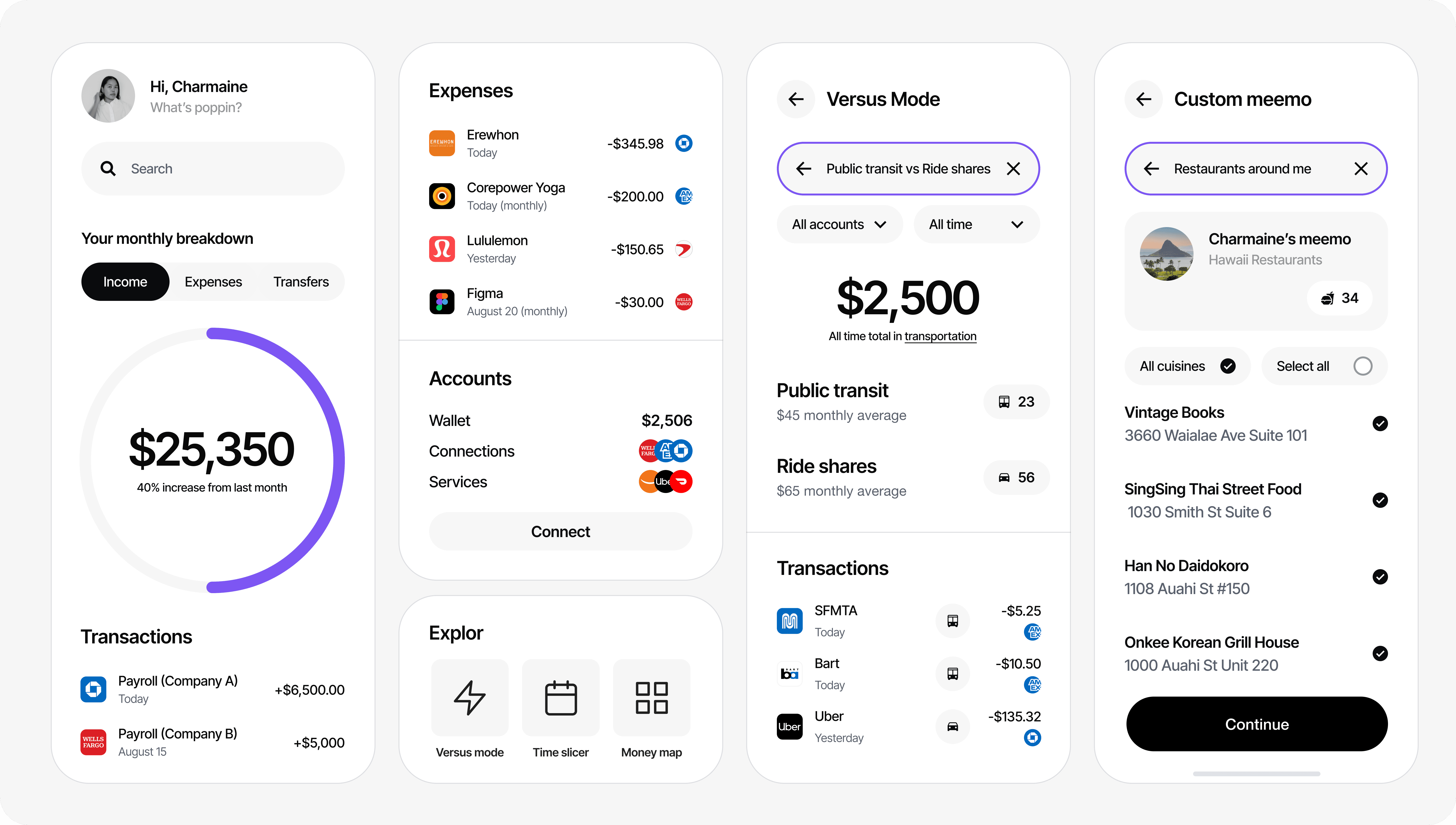
Given a dedicated space within the Explore tab, now paired with contextual tooltips that help users better understand their spending trends and behaviors at a glance.
AI-powered search
Users could now easily sort through past activity, habits, and trends using a playful, intelligent search. The feature also surfaced surprising, shareable insights and nudged users with notifications when something interesting came up.
Custom meemo
Gift-giving became more delightful with enhanced preview cards, smart recipient suggestions, and emoji-based personalization, making it easier and more joyful to send thoughtful, cash-based treats.
Weekly reviews
Transformed into a tappable, story-like format using cards and personalized insights to encourage frequent check-ins. This modern approach made financial reflection feel light, engaging, and habit-forming.
Product architecture
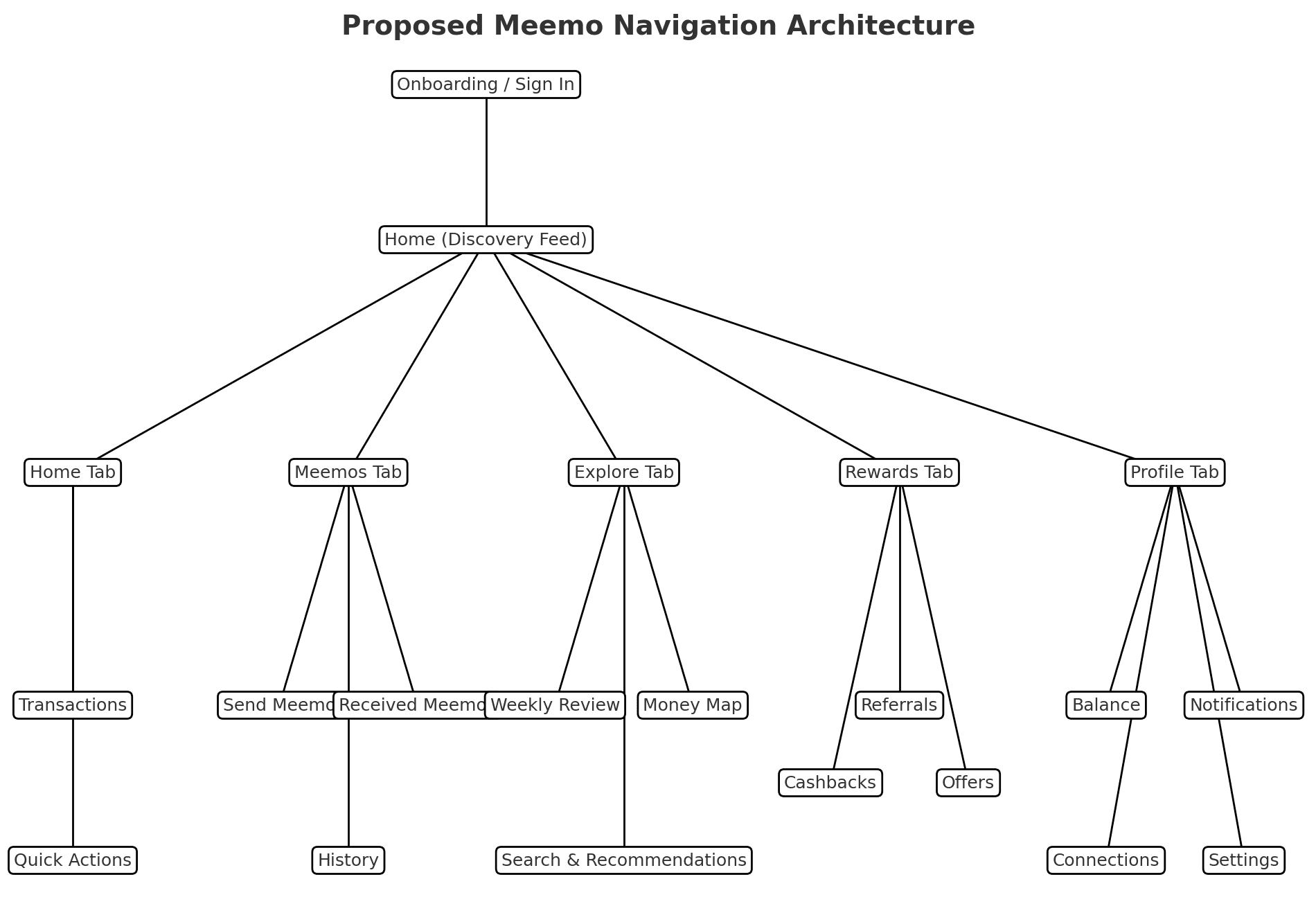
To address discoverability and engagement challenges, we redesigned Meemo’s feature hierarchy, information architecture, and navigation model to create a system that reflects user mental models and product priorities.
Feature Hierarchy
Using card sorting, click tests, and stakeholder input, we prioritized features by user value, frequency of use, and technical stability. This led to a redefined home screen and bottom navigation that elevated Transactions, Send/Receive, and Rewards as primary tabs, while secondary insights like Money Map and Weekly Reviews were surfaced contextually.
Information Architecture
We streamlined existing flows to reduce cognitive load. Gifting features were consolidated into a unified Meemos flow, while AI search, Weekly Reviews, and personalized insights were grouped under a new Explore tab, giving structure to features that were previously scattered.
Navigation Model
We introduced a clearer, more scalable bottom navigation system with labeled icons and added quick actions for high-frequency tasks like sending money and checking subscriptions. This improved clarity, increased discoverability, and created a foundation for future features to fit seamlessly into the product.
To address discoverability and engagement challenges, we redesigned Meemo’s feature hierarchy, information architecture, and navigation model to create a system that reflects user mental models and product priorities.
Feature Hierarchy
Using card sorting, click tests, and stakeholder input, we prioritized features by user value, frequency of use, and technical stability. This led to a redefined home screen and bottom navigation that elevated Transactions, Send/Receive, and Rewards as primary tabs, while secondary insights like Money Map and Weekly Reviews were surfaced contextually.
Information Architecture
We streamlined existing flows to reduce cognitive load. Gifting features were consolidated into a unified Meemos flow, while AI search, Weekly Reviews, and personalized insights were grouped under a new Explore tab, giving structure to features that were previously scattered.
Navigation Model
We introduced a clearer, more scalable bottom navigation system with labeled icons and added quick actions for high-frequency tasks like sending money and checking subscriptions. This improved clarity, increased discoverability, and created a foundation for future features to fit seamlessly into the product.
Establishing the design systems
At the outset, Meemo lacked a cohesive design system. UI inconsistencies were impacting both user trust and development velocity. To solve this:
We initiated weekly design system workshops
Defined visual principles (playful yet trustworthy, social but minimal)
Developed a foundational system including typography, color, spacing, and component library
Matheus who specializes in the initial branding choices and illustrations led the refinement of components, while the rest of the team explored the aesthetic direction — balancing accessibility, brand personality, and modernity.
At the outset, Meemo lacked a cohesive design system. UI inconsistencies were impacting both user trust and development velocity. To solve this:
We initiated weekly design system workshops
Defined visual principles (playful yet trustworthy, social but minimal)
Developed a foundational system including typography, color, spacing, and component library
Matheus who specializes in the initial branding choices and illustrations led the refinement of components, while the rest of the team explored the aesthetic direction — balancing accessibility, brand personality, and modernity.
Collaboration
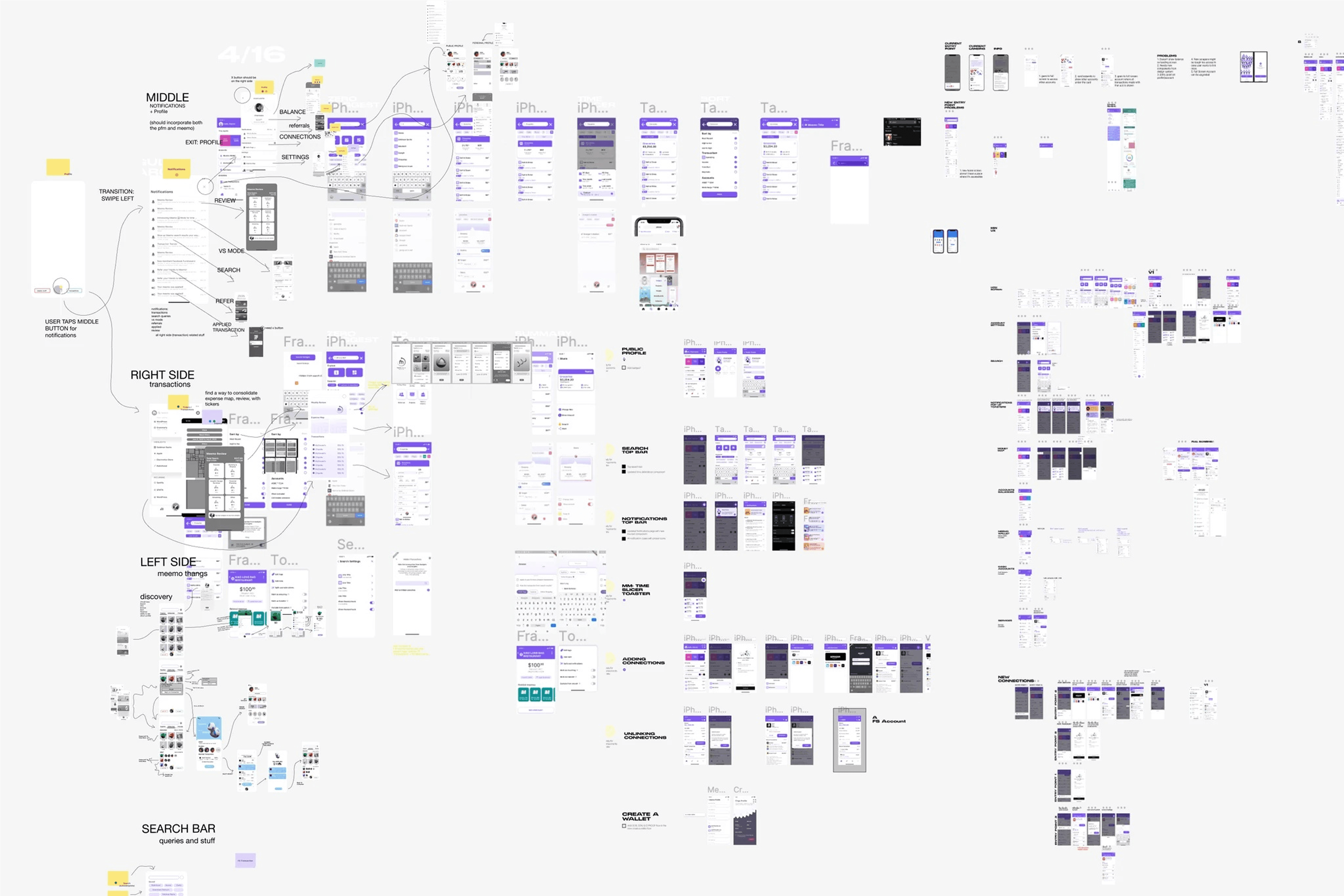
At the start of COVID, when teams across the company went fully remote, collaboration became more difficult without the immediacy of in-person discussions and whiteboarding. To adapt, we created intentional structures that kept the team aligned, creative, and moving quickly despite the distance.
This was a 0 to 1 MVP collaboration between five designers, including myself. Our lead designer outlined a systematic approach, and together we refined the direction through weekly brainstorms and planning reviews, user journey mapping, design critiques, and async feedback loops. We also partnered closely with engineering throughout to validate feasibility and accelerate implementation.
Despite the remote-first constraints, we delivered a functional MVP that shipped on schedule, established scalable design foundations for future iterations, and proved the effectiveness of our remote design process. The project not only launched successfully but also set a new model for cross-disciplinary collaboration in a distributed environment.
At the start of COVID, when teams across the company went fully remote, collaboration became more difficult without the immediacy of in-person discussions and whiteboarding. To adapt, we created intentional structures that kept the team aligned, creative, and moving quickly despite the distance.
This was a 0 to 1 MVP collaboration between five designers, including myself. Our lead designer outlined a systematic approach, and together we refined the direction through weekly brainstorms and planning reviews, user journey mapping, design critiques, and async feedback loops. We also partnered closely with engineering throughout to validate feasibility and accelerate implementation.
Despite the remote-first constraints, we delivered a functional MVP that shipped on schedule, established scalable design foundations for future iterations, and proved the effectiveness of our remote design process. The project not only launched successfully but also set a new model for cross-disciplinary collaboration in a distributed environment.
Research and discovery
We began with a context analysis to understand Meemo’s current standing, target users, and competitive landscape:
Target Audience
Digitally native, Gen Z and Millennial users
Financially curious but overwhelmed
Motivated by social sharing, rewards, and personalization
Competitive Analysis
We looked at products like Venmo, Cash App, and Cleo to understand how they handled similar social-financial hybrids. We discovered that:
Competitors leaned into simplicity and humor
Strong use of microcopy and focused feature sets
High-value features were surfaced upfront, not buried
Brand marketing and user acquisition
Once our features were ready to launch, I collaborated with our social media manager, Lauren, to extend Meemo’s brand into marketing. Since our audience was primarily Gen Z and millennials, we shaped a voice and visual style that felt playful, relatable, and authentic.
We combined custom illustrations with real-life photography to highlight moments users could connect with, and partnered with artists and influencers to expand reach beyond our immediate circles. To accelerate growth, we rallied friends, family, and extended networks to try the app, give feedback, and help us quickly debug and iterate on designs.
This grassroots approach drove early adoption and brand awareness, resulting in thousands of initial signups, stronger engagement with new features, and a social presence that positioned Meemo as a fresh, approachable product that resonated with younger audiences.
Once our features were ready to launch, I collaborated with our social media manager, Lauren, to extend Meemo’s brand into marketing. Since our audience was primarily Gen Z and millennials, we shaped a voice and visual style that felt playful, relatable, and authentic.
We combined custom illustrations with real-life photography to highlight moments users could connect with, and partnered with artists and influencers to expand reach beyond our immediate circles. To accelerate growth, we rallied friends, family, and extended networks to try the app, give feedback, and help us quickly debug and iterate on designs.
This grassroots approach drove early adoption and brand awareness, resulting in thousands of initial signups, stronger engagement with new features, and a social presence that positioned Meemo as a fresh, approachable product that resonated with younger audiences.
Coinbase acquisition
After only a few months post-launch, Meemo was acquihired by Coinbase in 2021. Our team brought deep expertise in data analysis, personalization, and consumer fintech, helping shape the next generation of crypto and Web3 experiences.
This acquisition was more than just a new chapter for the product—it was a chance to scale Meemo’s vision of making finance more social, accessible, and intelligent within a platform committed to expanding economic freedom worldwide.
I was the only Product Designer to join through the acquisition, an opportunity I remain deeply grateful for. It allowed me to grow rapidly, refine my craft, and contribute to foundational systems and experiences at Coinbase that reached millions of users globally.
Reflection
My 1.8 years at Meemo remain one of the most defining chapters of my career. It was where I truly explored product design at my own pace—experimenting, iterating, and learning how to creatively solve problems while bringing a product from 0 to 1 and launching it into the world. Even if only a small group of people used it, the process of building, testing, and refining was incredibly fulfilling.
Looking back from 2025, I’m still deeply grateful for that experience. Meemo showed me how fun and energizing it is to build with the right people, and it reinforced my love for crafting systems and products that feel both playful and purposeful. I still believe in what we created and hope to one day work on something just as ambitious and inspiring.
My 1.8 years at Meemo remain one of the most defining chapters of my career. It was where I truly explored product design at my own pace—experimenting, iterating, and learning how to creatively solve problems while bringing a product from 0 to 1 and launching it into the world. Even if only a small group of people used it, the process of building, testing, and refining was incredibly fulfilling.
Looking back from 2025, I’m still deeply grateful for that experience. Meemo showed me how fun and energizing it is to build with the right people, and it reinforced my love for crafting systems and products that feel both playful and purposeful. I still believe in what we created and hope to one day work on something just as ambitious and inspiring.